












Bond Funds | How to Analyze, Compare, and Invest in Bond Funds
 Share
Share
As an everyday investor, you will have access to a small number of bond types that you can purchase online with ease. This mainly centers on government bonds like US Treasuries and UK Gilts, as well as a selection of corporate bonds.
With that said, in comparison to the institutional space, you will be extremely limited in what bonds you can buy and sell. This is because banks and other financial institutions can purchase bonds directly from the issuer, as they have the resources to meet minimum lot sizes.
The good news is that by investing with a bond fund, you’ll be able to access the very same bond instruments that are typically reserved for institutional money. As bond funds are actively managed by the provider, you’ll also be able to earn passive income without needing to lift a finger.
In this article, we explain the ins and outs of bond funds, how they work, what sort of returns you should expect, and more.
-
-
Featured Bonds Broker 2020

- Minimum deposit and investment just $5
- Access to Bonds, as well as Stocks and Funds
- Very user friendly platform
 Reviewers Choice Fundrise
 RatingAvailable Loan Amount$500 - UndisclosedAvailable Term Length90 day money back guarenteeRepresentative APRTypical 5% - 7%Product Details
- You can re-invest your earnings using the auto-invest or ‘DRIP’
- The fees are seemingly lower than competing platforms
Pros- 90 days money-back guarantee
- Access to commercial real estate
- You can’t choose the projects you invest in individually
- Tax liability – the income you earn is taxed as ordinary income
Key Facts- Low Starting Investment of $500
- No income or accredited investor requirements
Proper – Invest RatingAvailable Loan Amount$25 - UndisclosedAvailable Term Length3 or 5 yearsRepresentative APR3.4% - 8.0%Product Details
- Pick Individual Investments
- Auto Select Available On Investments
Pros- Help Real People
- Manage Your Investment Via Mobile
- Not Available In All States
- Borrower Loans are Unsecured
Key Facts- $16 BILLION INVESTED
- Almost a Million People Lent To
Funding Circle – Invest
RatingAvailable Loan Amount$25,000 - $500,000Available Term Length6 months to 5 yearsRepresentative APR4.99% to 27.99% (variable)Product Details- 1% Annual Fee
- Fully Regulated
Pros- Historic Annual Returns of 5% - 7%
- Min Investment of $25,000
- No Default Statistics
- Most Loans Are Unsecured
Key Facts- Over $10 Billion Invest Globally
- Support American Businesses
- Grow Your Portfolio With Auto Invest
What is a Bond Fund?
In order to understand what a bond fund is, we first need to unravel the individual characteristics of a ‘bond’ and a ‘fund’.
Bonds
 Bonds are issued by governments or corporations as a means to raise cash. The former will typically use the money to pay for frontline government services, and the latter to help facilitate a business need or requirement. Either way, those that invest in bonds are essentially loaning money to a government or blue-chip company. In return, the institution will pay you a fixed rate of interest known as the ‘yield’.
 Bonds will also come with a fixed term known as the ‘maturity’. For example, let’s say that the yield on the bonds is 7% with a maturity of 5 years. This means that you will earn 7% in fixed interest payments, usually paid every 6 or 12 months, for 5 years. Then, once the 5-year bonds mature, you’ll receive your original investment back.
Check out the example below of how a bond investment would work in practice.
- A company listed on the NYSE issues $100 million worth of bonds.
- Each corporate bond has a denomination of $1,000.
- You decide to buy 5 bonds, meaning you’ve invested $5,000.
- The yield on the bonds is 6% and the maturity is 10 years.
- At the end of each year you will receive $300 in interest (6% x $5,000)
- You get a further $300 in interest each year until the 10-year maturity date concludes
- Once the bonds mature, you’ll get your $5,000 investment back in full.
As you can see from the above example, you made a rather juicy $3,000 ($300 interest x 10 years) on your bond investment without needing to lift a finger. Instead, the income was earned in a passive manner. The only caveat to your bond investment is that you were required to lock your money away for 10 years.
Funds
So now that you what know a bond is, let’s explore how a fund works. In a nutshell, a mutual fund or simply a ‘fund’, is a large scale financial institution that will pool investor money together. In doing so, it will likely have a multi-billion dollar portfolio that allows the fund to buy and sell assets on behalf of its investors. You will then receive a share of any profits that the fund makes proportionate to the size of your investment.
Funds come in a range of shapes and sizes, especially in the bond space. For example, you might decide to invest in a fund that buys and sells low-risk government securities (US Treasury Bonds and T-Bills). Alternatively, if you want to diversify across multiple sectors, you might opt for a fund that invests in a range of corporate bonds, municipal bonds, and government bonds.
Here’s an example of how a bond fund might work in practice:
- You decide to invest $10,000 into a fund that specializes in US corporate bonds.
- The fund will buy and sell thousands of bonds throughout the course of the month each with different risk levels, yields, and maturity dates.
- At the end of each month you will receive your share of the fund’s coupon payments.
- Any gains that are made from buying and selling bonds at a profit will be paid to you at the end of each year.
- You can usually withdraw your investment at any given time.
How do Bond Funds Work?
So now that you have a basic understanding of both ‘bonds’ and ‘funds’, we are now going to explore how a ‘bond fund’ investment typically works.
Your Investment is Managed for you
If you were to buy bonds in the traditional sense, you would be required to actively manage the investment process. By this, we mean that you would need to:
- Perform in-depth research on the pros and cons of each bond as a viable investment
- Analyze the risks of the bond issuer
- Explore whether the bonds are available to buy as a retail investor
- Find a broker that lists the bonds that you wish to buy
- Purchase the bonds in the required lot size
- Re-invest your coupon payments elsewhere to earn passive income
With that said, by investing in a bond fund, you would not be required to perform any of the above tasks. Instead, once you’ve initially made an investment with the provider, bond funds actively manage your money on your behalf. This allows you to earn passive income in its truest form.
Bond Funds Have Access to Markets That You Don’t
 Sure, it’s easy to invest in government bonds issued by the US government, as you can do this through the Treasury Direct website. Some corporate bonds are also accessible as a retail investor, although you will need to find a broker that has access to the bond market in question.
 However, when it comes to the likes of government bonds issued by foreign states, corporate bonds from emerging markets, or even convertible bonds as this area of the bond arena is typically reserved for the institutional space.
The reason for this is that less liquid markets require a minimum investment amount that often runs into seven figures. As such, although you likely won’t have the means to meet these minimums, bond funds certainly will. Don’t forget, large-scale bond funds often have access to a multi-billion-dollar investment pool, so rarely will an investment be out of reach. Crucially, this is the only way that you will be able to gain exposure to certain bond markets as a retail investor.
Bond Funds Will Always Diversify
Bond funds are required to manage money on behalf of investors, so it makes sense that they will strive to mitigate their risks as much as possible. Although certain bond funds will take higher risks than others, fund managers will diversify across multiple bond instruments.
For example, a bond fund that specializes in low-risk government securities will likely have a basket that consists of varying US Treasuries, UK Gilts, and Euro-denominated securities. Not only this, but each fund portfolio will consist of thousands of individual bonds at any given time. Essentially, the more bonds within a basket, the more a fund can diversify.
Bond Funds Rarely Hold Onto Bonds Until Maturity
When you purchase traditional bonds from the open market, it’s likely that you are doing so with the view of holding onto the bonds until they mature. For example, if you buy a 7-year corporate bond at a yield of 6%, you will probably do so to enjoy 7-years worth of passive income. However, bond funds will rarely, if ever, hold onto bonds until they mature. Instead, funds will attempt to profit when the value of the bond goes up in the secondary market.
For example, let’s say that the fund purchases $50 million worth of corporate bonds at the time of issue. Although the bonds came with a coupon rate of 5%, they are now selling at a premium on the secondary market, as the issuer recently reported better than expected financial results. By selling the bonds before maturity at a premium, the bond fund no longer has to worry about the risks of default.
How do Bond Funds Make me Money?
When you invest with a bond fund, you and thousands of other investors, provide the required capital for the fund to operate. In return, you will be entitled to your share of the profits. However, unlike a traditional bond investment, you will have the opportunity to make money on two different fronts; coupon payments and capital gains.
Here’s how each revenue stream works:
Coupon Payments
 When you invest in a bond, you will always get coupon payments. This refers to the interest that the issuer pays you in return for lending it money and it’s typically distributed every 6 to 12 months. If you hold onto bonds until maturity, you will get fixed coupon payments throughout the course of the term.
 As we discussed earlier, funds will rarely hold on to bonds until maturity. However, while the bonds are still within the fund’s portfolio, they will be entitled to coupon payments. As the fund will likely hold thousands of different bonds with varying coupon payment dates, the amount of interest received will change on a monthly basis.
As such, at the end of each month the fund will tally up all of its incoming coupon payments (less fees), and then distribute your proportionate share.
For example:
- You invested $10,000 into a bond fund
- In month one, the bond fund receives coupon payments that amounts to 4% of its total NAV (Net Asset Value)
- As you have $10,000 invested with the fund, you will receive $400 in coupon payments at the end of month one ($10,000 x 4%)
- In month two, coupon payments amount to 6%, so you’ll receive your $600 share ($10,000 x 6%).
As you can see from the above example, the amount of money that you make from coupon payments will change each and every month and be paid to you on a monthly basis. This second point is crucial, as you would ordinarily need to wait 6 or 12 months to receive bond coupon payments, so you have access to your gains much sooner when using a fund!
Capital Gains
On top of regular coupon payments, bond funds will also make or lose money when they buy and sell bonds before maturity. This is highly beneficial for you as an investor, as you will be entitled to your share of any profits made by the fund manager without needing to have done any of the hard work. This also reduces the risks of encountering a default from the bond issuer, as the fund manager will sell the bonds long before the principal payment is due.
In order to make a profit when selling bonds on the secondary market prior to maturity, the bonds must sell at a premium. This is based on market forces. For example, let’s say that the bonds were issued by the US government. If the US economy grew by more than the markets expected, the risks of default go down, meaning that the bonds sell at a premium.
Similarly, let’s say that the bonds were issued by Apple. If the trade war between the US and China was to resume, this would impact Apple directly as China sits at the core of its supply chain. As such, the risks of default go up, meaning that the bonds sell at a discount. If this is the case, the bond fund would be selling the bonds at a loss.
Bond funds will make and lose money throughout the course of the year, albeit, it is hoped that the gains will outweigh the losses come year-end.
Here’s an example of how you stand to make money from the capital gains made by bond funds.
- You currently have $20,000 invested with a bond fund
- The bond fund makes 10% profit, after tax and other expenses, from buying and selling corporate bonds throughout the year
- You would be entitled to a capital gains payment of $2,000 at year-end ($20,000 x 10%)
- This would be on top of the monthly coupon payments that you would have received throughout the year.
This once again illustrates that bond funds are ideal if you’re looking to grow your money without putting any of the hard work in. In fact, bond funds are also perfect if you’ve got no experience in online investing, as the fund manager will decide which assets to buy and sell!
Fees: How Much do Bond Funds Cost?
As we have noted throughout our guide so far, one of the main benefits of investing in a bond fund is that you will be able to grow your money passively. With that said, you will need to pay a fee for the luxury of having a top-tier bond fund manage your money on your behalf. Although the specific fees will vary from provider-to-provider, this will often consist of the following:
Annual Maintenance Fee
The main fee that you need to be aware of is the annual maintenance fee. This is charged to cover the administrative costs of managing your money.
This might include:
- Verifying your identity when you open your account
- Processing deposits and withdrawals
- Distributing your monthly coupon payments
- Distributing your annual capital gains
- Customer service
The maintenance fee will often sit between 0-1%, and it is charged on the amount of money that you have invested with the bond fund. For example, if you have $15,000 invested and the maintenance fee amounts to 0.5%, you will pay $75 per year.
Commission
The bond fund provider is tasked with making as much money as possible for its investors. To ensure that the provider remains motivated at all times, they will often charge an annual commission fee. This operates like a profit share, where the bond fund retains a small proportion of any gains it makes throughout the year.
For example:
- You invest $20,000 with a bond fund
- The bond fund makes annualized returns of 10%
- This means that you grew your investment by $2,000 ($20,000 x 10%)
- The fund provider charges 5% commission on profits made
- The 5% would be charged against the $2,000 profit you made
- This amounts to $100 in commission, so you actually receive $1,900 ($2,000 – $100)
Types of Bond Funds
Bond funds can typically be broken down into four main categories.
- Government Bond Funds: Providers will invest in bonds issued by nation-states. A low-risk government bond fund might consist of US securities like Treasury Bonds and T-Bills.
- Corporate Bond Funds: Corporate bonds are issued by companies that are listed on major stock exchanges like NASDAQ and the NYSE. Corporate bond funds will invest in companies of varying risk-levels.
- Municipal Bond Funds: Municipal bonds are issued by governmental organizations, but locally. This might be at a state, city, or even regional level. These bond funds carry more risk than government bonds, as they don’t have the backing of central banks, such as the Federal Reserve or Bank of England
- Diversified Bond Funds: Diversified bond funds will invest in a range of different bond types. For example, a low-risk fund might invest in US Treasuries and high-grade corporate bonds. A high-risk fund might opt for bonds issued by emerging nation-states and corporations involved in volatile marketplaces.
How do I Invest in a Bond Fund? Quickfire Step-by-Step Guide
Like the sound of bond funds and wish to make an investment today? If so, follow the quickfire step-by-step guidelines outlined below!
Step 1: Choose a Bond Fund
You will first need to choose a bond fund that you wish to invest in. The fund that you go for will depend on a range of factors, such as:
- What bonds the fund manager invests in
- Historical annualized returns made by the fund
- Minimum investment and eligibility
- Expense ratio and other fees
- Redemption fee for early withdrawals
Step 2: Open an Account & Verify Identity
Once you’ve found a bond fund that you like the look of, you’ll need to open an account. You will be required to enter a range of personal and financial information. The fund will also ask that you verify your identity, so be prepared to upload a copy of your government-issued ID and a proof of address.
Step 3: Deposit Funds
Once your identity has been verified, you’ll then need to deposit some funds. This needs to cover the amount that you wish to invest in the fund. You will likely need to make a deposit via a bank transfer, although some providers accept a debit/credit card.
Step 4: Earn Passive Income
Now that you have invested in your chosen bond fund, you will be entitled to passive income. You will have your monthly coupon payments paid directly into the cash account of your bond fund. Your capital gains will be paid annually. Most bond funds allow you to withdraw your investment at any given time, albeit, you might need to pay an early redemption fee if you’ve not been with the provider for long.
Conclusion
We hope that you now have a firm understanding of what bond funds are, how they work, and whether or not they fit with your long-term investment goals. The overarching benefit of investing with a fund is that you will earn passive income without needing to lift a finger.
By paying a small annual fee and/or commission, bond funds also give you access to markets you would otherwise find difficult to reach. The only challenging part of the investment process is deciding which bond fund to entrust your money with!
Featured Bonds Broker 2020
- Minimum deposit and investment just $5
- Access to Bonds, as well as Stocks and Funds
- Very user friendly platform
Glossary of Bonds Terms
BondA bond is when companies or goverments need to generate funds and when you invest you will receive you lump sump back with interest at the end of your agreement.
Treasury BondBonds issued by the United States Department of the Treasury to finance government spending.
Treasury NoteA Treasury Note are bonds issued by the United States Department of the Treasury and last up to 10 years.
Treasury SecurityTreasury securities are the bonds issued to investors by the U.S. government
Municipal BondsA Municipal Bond is usually issued by local Governments to finance public projects such as roads, schools, and airports. You will recieve you lump sum and interest back at the end of the term.
Corporate BondsA Corporate Bond is issued by businesses to raise funds for expansions or projects. You will recieve you lump sum and interest back at the end of the term.
Premium BondsA Bond that has no interest rate but your investments are entered into prize draws to win £25 to £1mil.
Savings BondUsually offered by Banks and Building Societies, Saving Bonds will last for a fixed term and earn interest. You are not able to access the money during the fixed term.
Fixed Rate BondsA Fixed Bond will start and end with same Interest Rate.
FAQs
What are bond funds?
Bond funds are mutual fund providers that specialize in buying and selling bonds.
What types of bonds do funds invest in?
Every bond type imaginable! Whether it’s corporate, government, municipal, or convertible bonds, you’ll find a bond fund active in all segments of the industry!
What is the minimum amount I can invest with a bond fund?
Although account minimums will vary from provider-to-provider, most bond funds allow you to invest from $100-$1,000 upwards.
When can I withdraw my investment from a bond fund?
Bond fund investments are fairly liquid, as you can withdraw your money whenever you like. Just make sure you check whether an early redemption fee applies.
What is the expense ratio?
The expense ratio refers to the total annualized fees charged by the bond fund.
What payment methods do bond funds support?
Most bond funds support bank transfers. Debit/credit card payments are sometimes supported.
See Our Full Range Of Bonds Resources – Bonds A-Z

Kane Pepi
Kane Pepi
View all posts by Kane PepiKane holds academic qualifications in the finance and financial investigation fields. With a passion for all-things finance, he currently writes for a number of online publications.
WARNING: The content on this site should not be considered investment advice. Investing is speculative. When investing your capital is at risk. This site is not intended for use in jurisdictions in which the trading or investments described are prohibited and should only be used by such persons and in such ways as are legally permitted. Your investment may not qualify for investor protection in your country or state of residence, so please conduct your own due diligence. Contracts for Difference (“CFDs”) are leveraged products and carry a significant risk of loss to your capital. Please ensure you fully understand the risks and seek independent advice. This website is free for you to use but we may receive commission from the companies we feature on this site.
Copyright © 2026 | Learnbonds.com
We use cookies to ensure that we give you the best experience on our website. If you continue to use this site we will assume that you are happy with it.Scroll Up


 Bonds are issued by governments or corporations as a means to raise cash. The former will typically use the money to pay for frontline government services, and the latter to help facilitate a business need or requirement. Either way, those that invest in bonds are essentially loaning money to a government or blue-chip company. In return, the institution will pay you a fixed rate of interest known as the ‘yield’.
 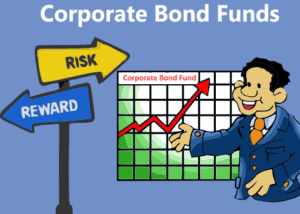 Sure, it’s easy to invest in government bonds issued by the US government, as you can do this through the Treasury Direct website. Some corporate bonds are also accessible as a retail investor, although you will need to find a broker that has access to the bond market in question.
  When you invest in a bond, you will always get coupon payments. This refers to the interest that the issuer pays you in return for lending it money and it’s typically distributed every 6 to 12 months. If you hold onto bonds until maturity, you will get fixed coupon payments throughout the course of the term.


